Reference Thermometers & Temperature Indicators
Reference thermometer readouts and digital temperature indicators for precision temperature measurement — pair with reference probes and calibrators.
What an indicator does
A temperature indicator / readout measures the signal from an RTD or thermocouple and displays temperature with higher resolution and better uncertainty than a basic DMM. Many models support probe characterization and documenting.
Choosing a readout
- Sensor inputs — RTD, thermocouple types, and channel count.
- Accuracy / resolution — must support your TUR with the probe you use.
- Portability — field handheld vs benchtop.
- Probe library / coefficients — important when you use calibrated reference probes.
Pairing
Use with Temperature Sensors and Temperature Calibrators. Product pages list compatible probes where OEM documentation is clear.
Reference readouts compared
Figures are from the Additel and AMETEK (JOFRA) specifications.
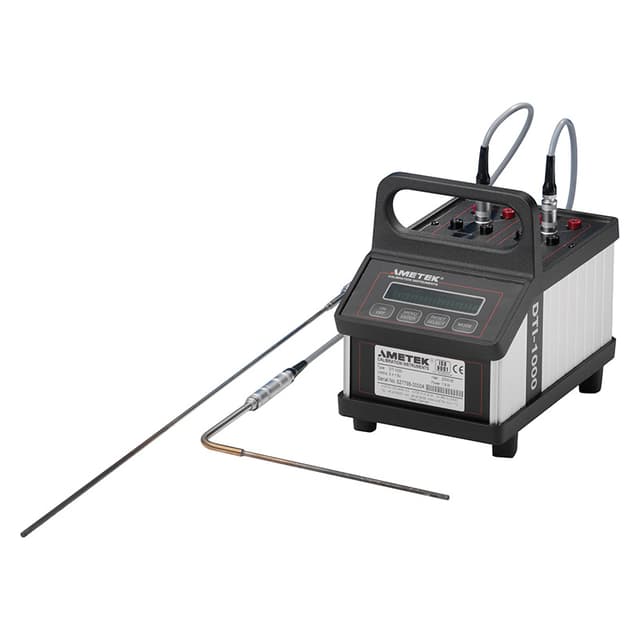
- JOFRA DTI-1000: ±0.004 °C one-year accuracy (±0.03 °C system accuracy with STS Series sensors), −200 to 750 °C, resolution to 0.001 °C, dual-channel inputs. AMETEK recommends it as the reference thermometer for verifying liquid baths and dry-block calibrators.
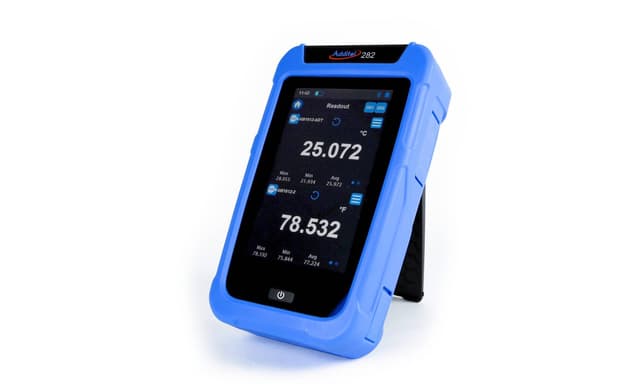
- Additel 282: handheld and dual channel, 0.006 °C readout accuracy at 0 °C, 1 mK resolution. It reads smart Lemo RTD/SPRT and mini-TC thermocouple inputs at the same time, shows CH1, CH2 or T1−T2, and has 8 GB of logging, USB-C and Bluetooth. IP67 and 1 m drop tested.
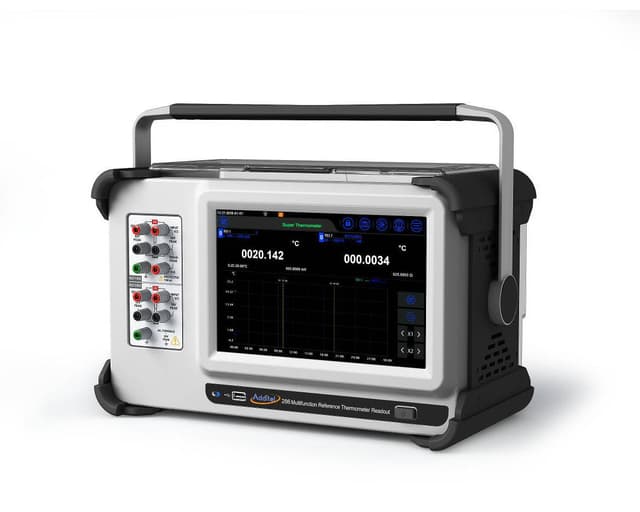
- Additel 286: a benchtop reference thermometer, data-acquisition system and 8.5-digit DMM in one. It has 1 ppm resistance-ratio accuracy on channel 1 and two precision channels, expandable to 82 with scanner modules at up to 10 channels per second. Built-in probe- and SPRT-calibration apps generate coefficients without external software.
REED digital thermometers
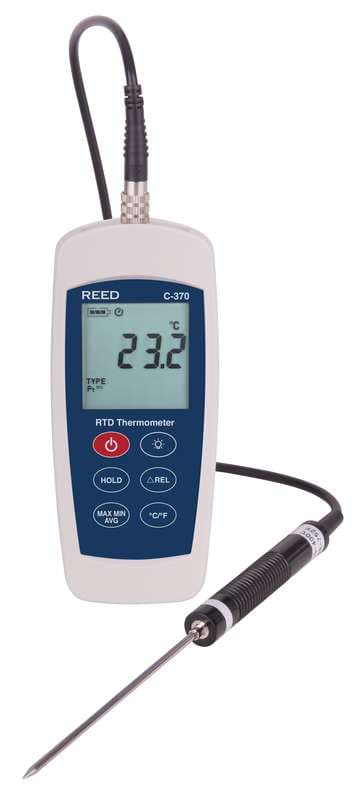
- REED C-370: RTD thermometer, −148 to 572°F (−100 to 300°C), ±0.1% of reading +0.8°F (0.4°C), 316 stainless stem. Designed to meet food service standards.
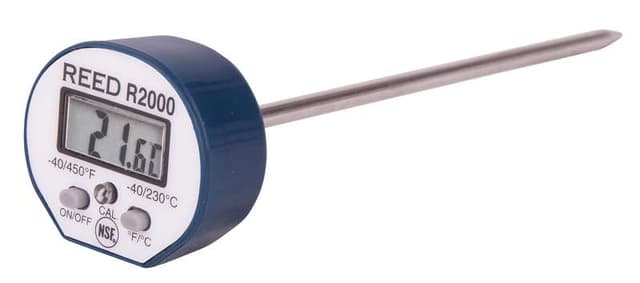
- REED R2000: stem thermometer, −40 to 450°F (−40 to 230°C), ±1°F (0.5°C) from 0 to 230°F. NSF certified and water-resistant, with a calibration screw and a 4.75 in (121 mm) stem.
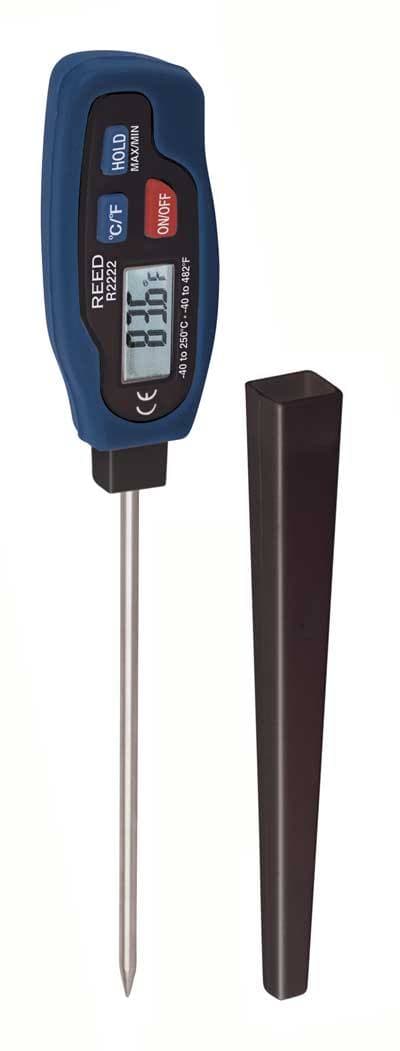
- REED R2222: stem thermometer, −40 to 482°F (−40 to 250°C), ±1.5% of reading +2°, with a 4.65 in (118 mm) stem, Max/Min and data hold.
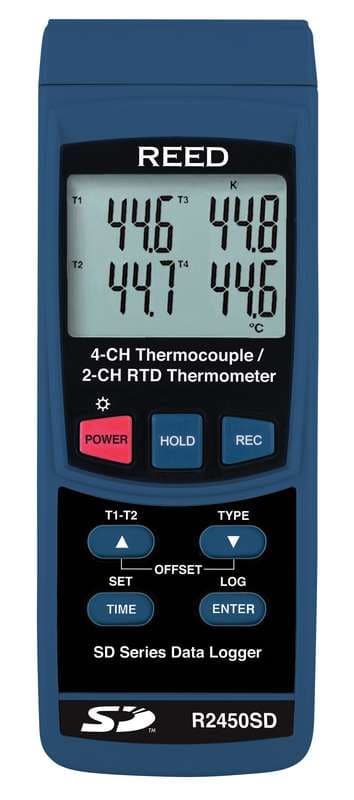
- REED R2450SD: displays up to 4 measurements at once and accepts type K, J, R, S, E and T thermocouples and RTD probes.
Models in this category
Digital thermometers
- REED C-370 RTD Thermometer: designed to meet food service standards.
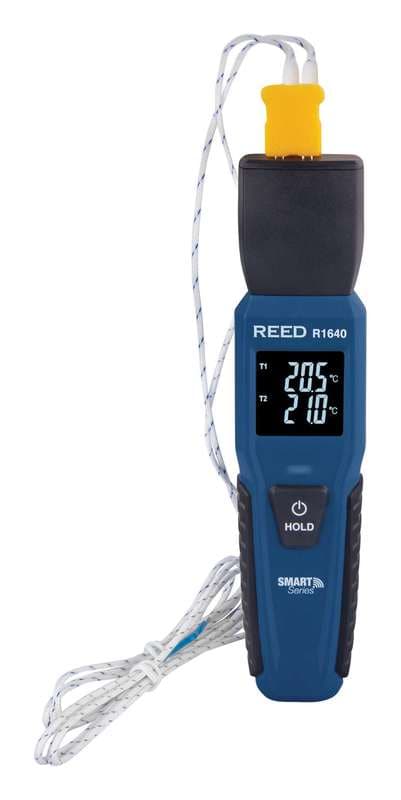
- REED R1640 Thermocouple Thermometer: displays 2 temperature measurements simultaneously.
- REED R2000 Stainless Steel Digital Stem Thermometer: stainless steel 4.75" (121mm) stem.
- REED R2222 Stainless Steel Digital Stem Thermometer: stainless steel 4.65" (118mm) stem.
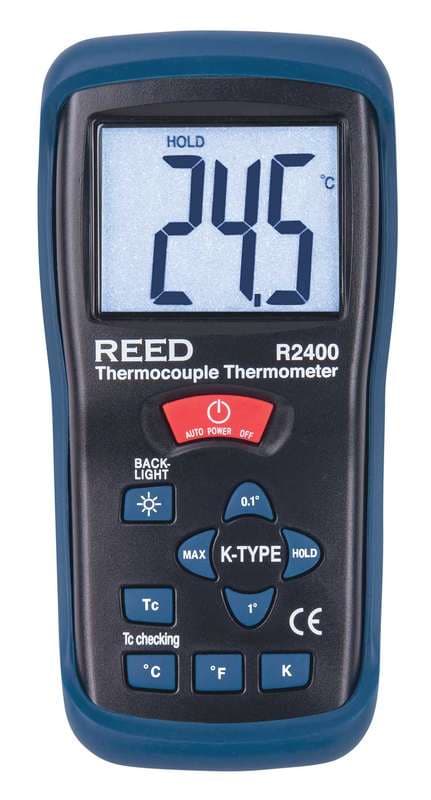
- REED R2400 Thermocouple Thermometer: type K thermocouple thermometer.
- REED R2450SD Data Logging Thermometer: displays up to 4 separate measurements simultaneously.
Reference readouts and indicators
- Additel 286 Multifunction Reference Thermometer Readout
- Additel 282 Dual Channel Handheld Reference Thermometer Readout
- JOFRA DTI-1000 Digital Temperature Indicator
Frequently asked questions
Which reference thermometer should I use to verify a dry block or liquid bath?
AMETEK recommends the JOFRA DTI-1000 as the reference thermometer for verifying the true temperature of liquid baths and dry-block calibrators. For a handheld dual-channel option, see the Additel 282.
How accurate are these reference thermometer readouts?
The JOFRA DTI-1000 is ±0.004 °C over one year (±0.03 °C system accuracy with STS Series sensors). The Additel 282 is 0.006 °C at 0 °C, readout only. The Additel 286 has 1 ppm resistance-ratio accuracy on channel 1.
Can one readout measure many sensors at once?
Yes. The Additel 286 starts with two precision channels and expands to 82 channels with scanner modules, at up to 10 channels per second.
Which REED thermometer is NSF certified?
The REED R2000 stainless steel stem thermometer is NSF certified. The REED C-370 RTD thermometer is designed to meet food service standards.
Which REED thermometer accepts several thermocouple types?
The REED R2450SD accepts type K, J, R, S, E and T thermocouples and RTD probes, and displays up to 4 measurements at once.
Calibration
Indicators can usually ship with ISO/IEC 17025 accredited calibration. Calibrate the indicator and probe as a system when your procedure requires it.
9 products found
Brand pages: Additel · JOFRA · REED Instruments