Gas, Leak, Radiation & EMF Safety Detectors
Safety and detection instruments for workplace hazards — combustible and refrigerant leak detectors, gas monitors, ultrasonic leak detectors, and related REED tools used by HVAC and industrial teams.
Common tools on this site
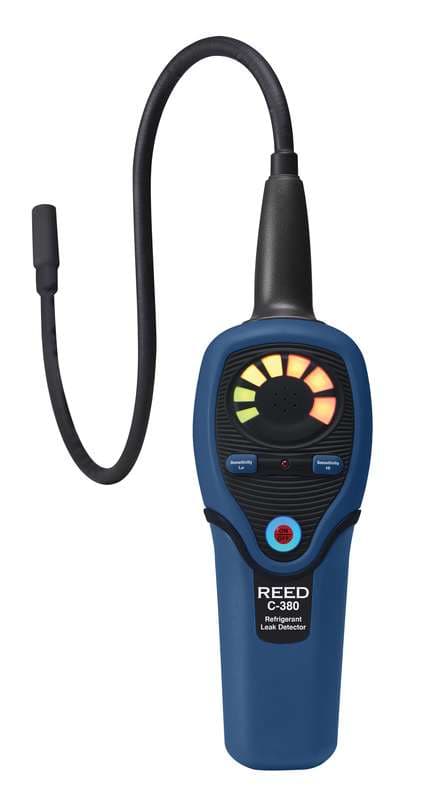
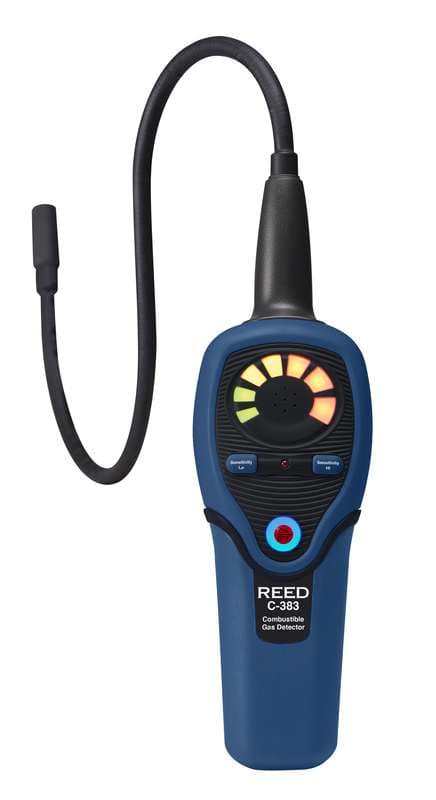
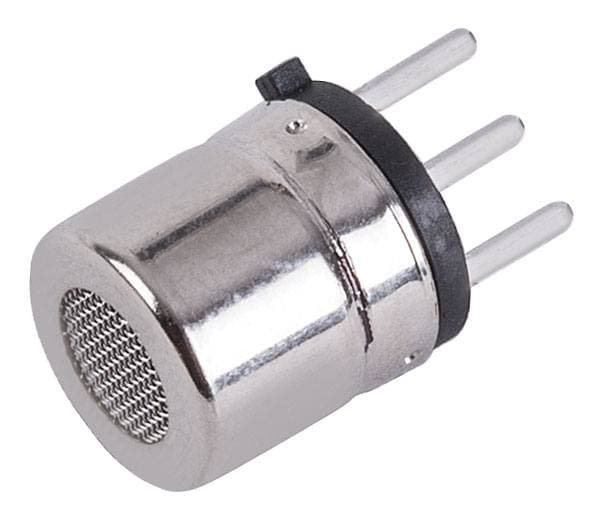
- Combustible / refrigerant leak detectors — REED C-380 refrigerant leak detector and C-383 combustible gas detector, with replacement sensors (R-134A, S-100B) and LC-R01 reference leak source when OEM pairing is clear.
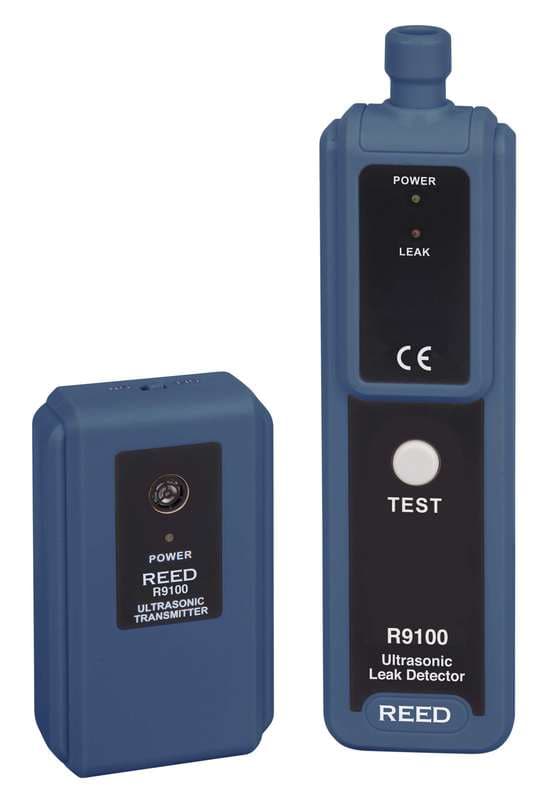
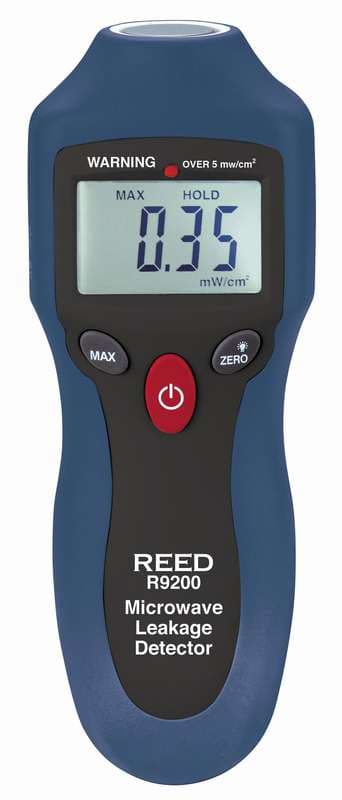
- Ultrasonic / microwave leak detectors — REED R9100 ultrasonic leak detector and R9200 microwave leakage detector for non-contact surveys.
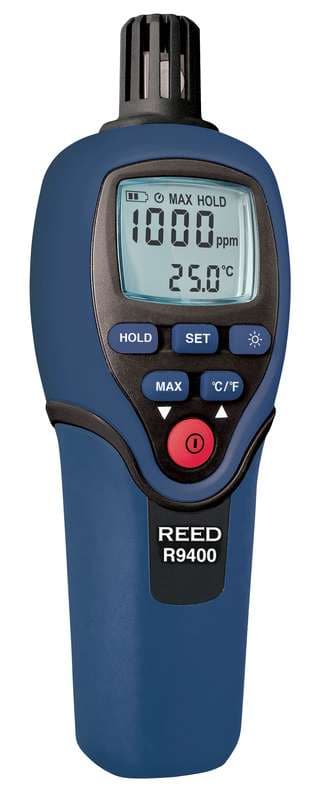
- Gas and air monitors — REED R9350 ammonia gas detector, R9400 carbon monoxide meter, and related air-quality meters when stocked.
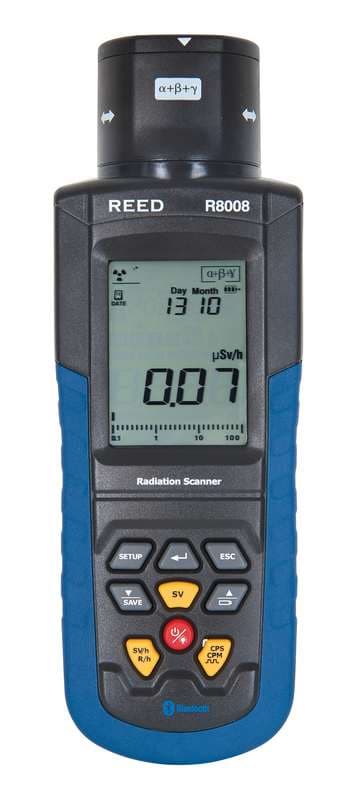
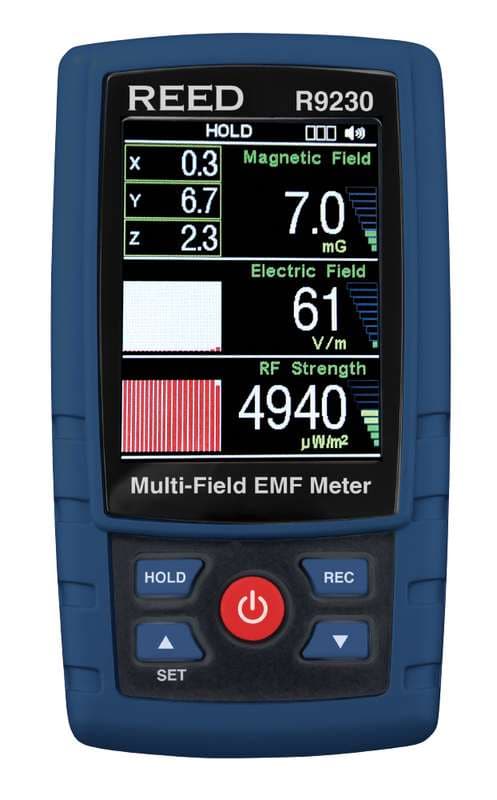
- EMF / radiation — REED R9230 3-axis EMF/RF detector and radiation dosimeters (R8008 / R9260) for specialized surveys.
Selection tips
- Match the sensor chemistry to the gas or refrigerant family (do not mix refrigerant and combustible sensors).
- Keep spare OEM sensors and reference leak sources for field maintenance.
- Follow OEM bump-test and calibration intervals printed on each product page.
- For ultrasonic leak detection, quiet ambient conditions improve results.
Related categories
Browse instrument accessories for replacement sensors and cases, and air quality for related environmental meters.
Models in this category
Gas and leak detectors
- REED C-380 Refrigerant Leak Detector: detects all CFCs, HFCs, and HCFCs.
- REED C-383 Combustible Gas Leak Detector: detects a wide range of combustible gases including; gasoline, propane, natural gas and fuel oil.
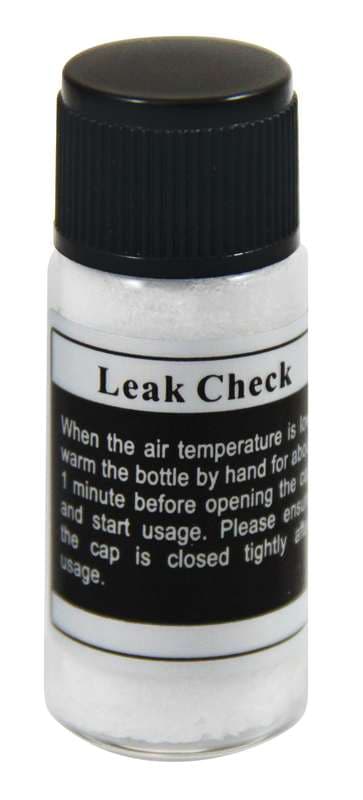
- REED LC-R01 Reference Leak Source For C-380
- REED R9100 Ultrasonic Leak Detector: locates leaks generated by pressure, vacuum, water, gas or air.
- REED R9200 Microwave Leakage Detector: detects very low levels of microwave leakage.
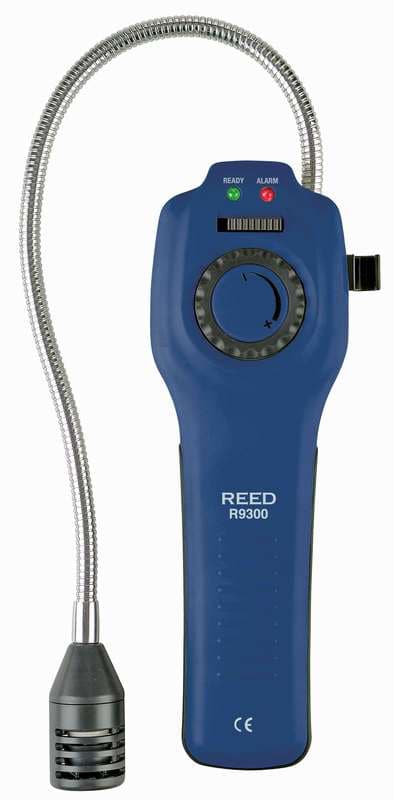
- REED R9300 Combustible Gas Leak Detector: detects a wide range of combustible gases including; gasoline, propane, natural gas and fuel oil.
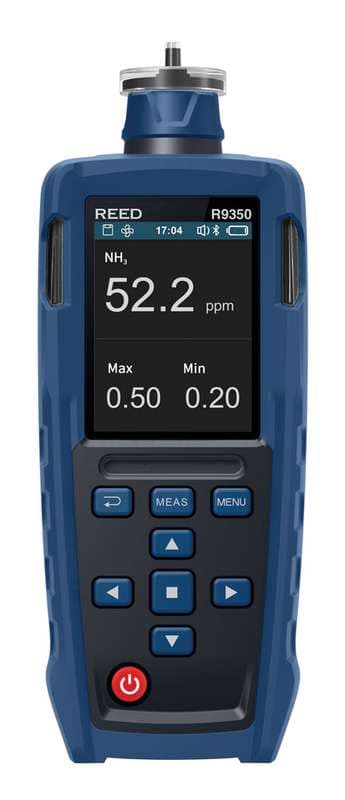
- REED R9350 Ammonia Gas Detector, 0 to 100ppm: 0 to 100 ppm detection range with built-in pump.
- REED R9400 Carbon Monoxide Meter with Temperature: backlit LCD displays CO levels from 0 to 1000ppm and ambient temperature.
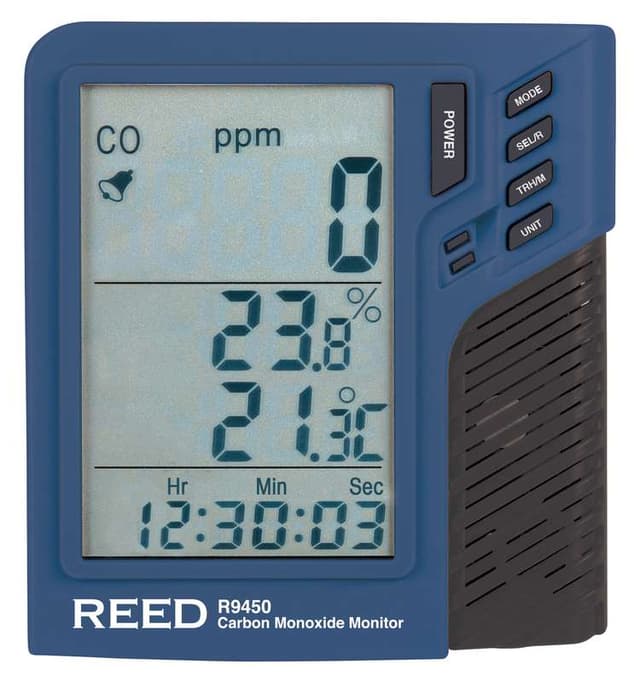
- REED R9450 Carbon Monoxide Monitor: measures carbon monoxide (CO), air temperature and relative humidity.
Radiation and EMF meters
- REED R8008 Portable Radiation Dosimeter: detects Alpha, Beta, Gamma, and X radiation.
- REED R9230 Multi-Field EMF Meter: magnetic field, electric field, and radio frequency (RF) strength measurements.
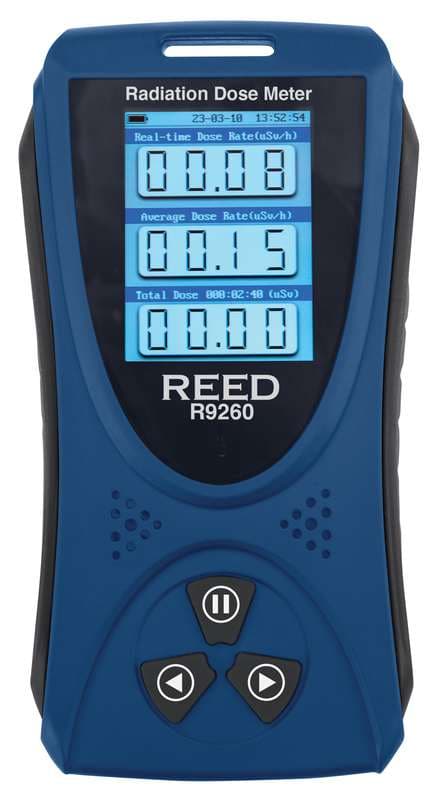
- REED R9260 Radiation Dose Meter: detects Beta, Gamma, and X radiation.
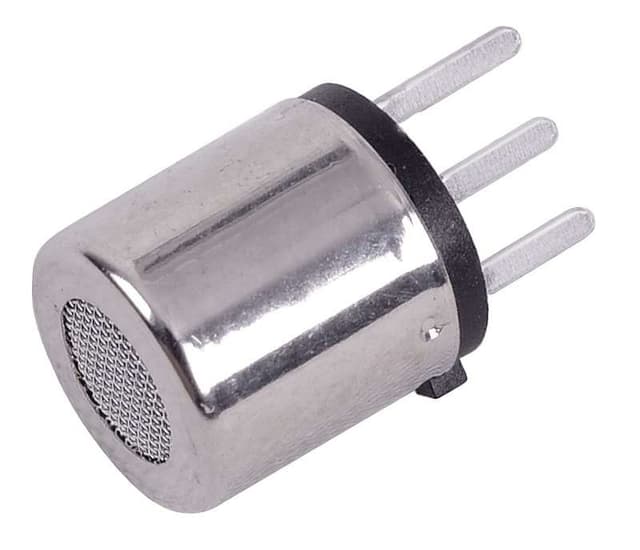
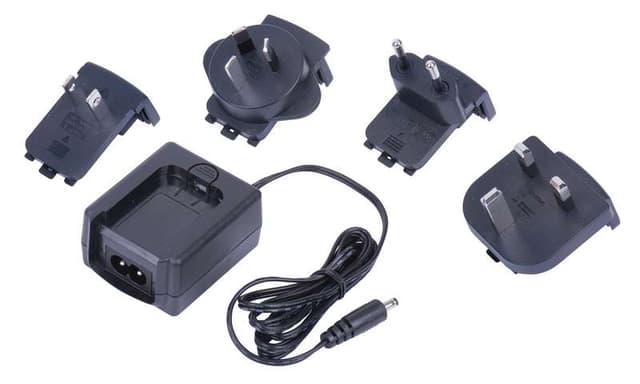
Accessories and replacement parts: REED R-134A Replacement Sensor For C-380, REED R9300-RS Replacement Sensor Tip For R9300, REED R9450-ADP International Power Adapter For R9450, REED S-100B Replacement Sensor For C-383.
Calibration
Eligible detectors can ship with ISO/IEC 17025 accredited calibration where applicable. Replacement sensors and leak sources are listed as accessories when OEM pairing is clear.
Frequently asked questions
Which leak detector finds refrigerant leaks?
The REED C-380 Refrigerant Leak Detector uses an advanced ionization detector with a response time of under 1 second. It detects CFCs, HCFCs and HFCs, including R22, R134a, R404A, R407C and R410A, as well as HFO-1234yf.
What is the difference between the C-383 and the R9300 combustible gas detectors?
Both use a heated semiconductor sensor and detect gases such as natural gas, methane, propane, butane and gasoline. - C-383: runs about 40 hours on 4 AA batteries, responds in under 1 second, and lists 5 ppm sensitivity for gasoline. - R9300: runs on 3 C batteries (about 8 hours) and responds in under 2 seconds.
Which meters measure carbon monoxide or ammonia?
- REED R9400: CO from 1 to 1000 ppm (±5% or ±5 ppm), plus ambient temperature.
- REED R9450: CO monitor, 0 to 999 ppm, with air temperature, relative humidity and user-adjustable alarm limits.
- REED R9350: ammonia, 0 to 100 ppm (±3.0% FS), with a built-in pump.
Which radiation meter should I choose?
- REED R8008: detects alpha, beta, gamma and X radiation, 0.0001 to 1000 μSv/h.
- REED R9260: uses a G-M counter tube and detects beta, gamma and X radiation, 0.05 μSv/h to 50 mSv/h.
How do I check for EMF or microwave leakage?
- REED R9230: multi-field meter covering magnetic field, electric field and RF strength (RF from 50 MHz to 3.5 GHz).
- REED R9200: detects microwave leakage from 0 to 9.99 mW/cm² at 2.4 GHz.
For pressure, vacuum, water, gas or air leaks, the REED R9100 Ultrasonic Leak Detector works at 40 kHz and gives audible and visual alarms.
16 products found
Brand pages: REED Instruments